Photo Art Ledger · physical execution
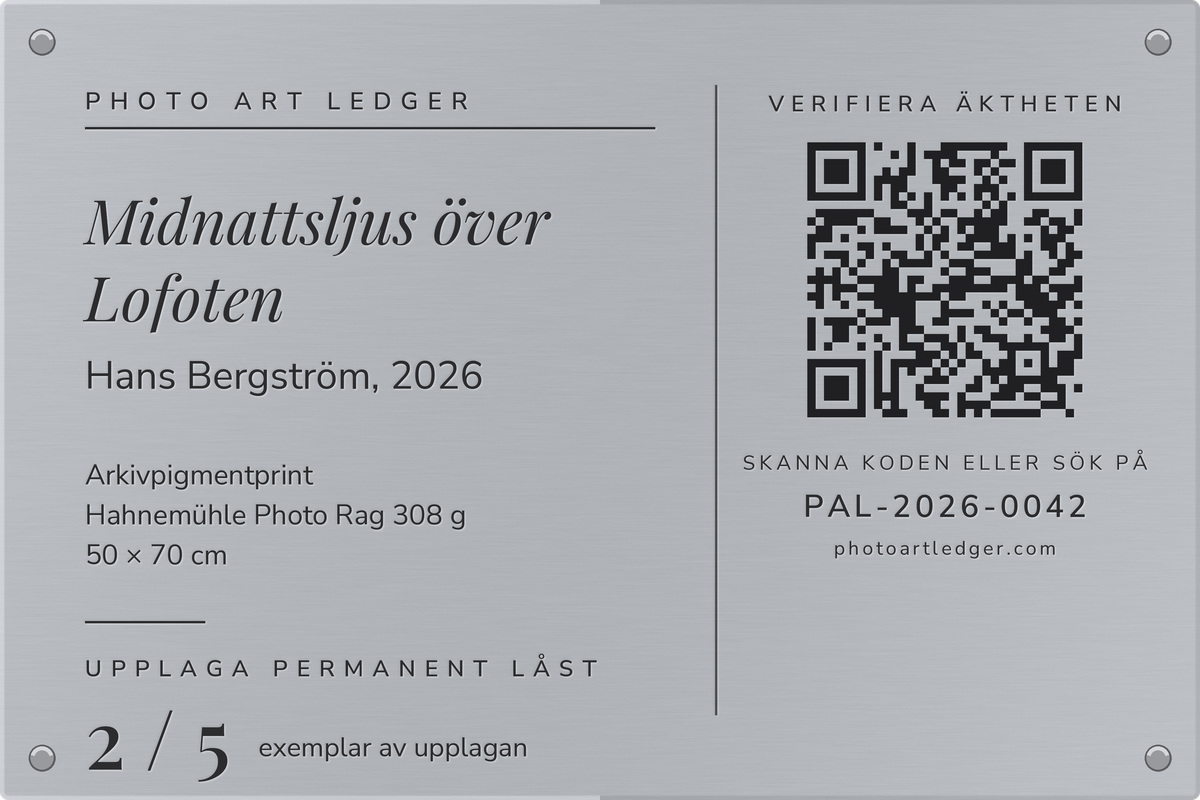
The registry stays invisible until someone is standing in front of the work. The plaque is where it becomes concrete: beside the print, carrying the edition number in plain text, two seconds from the registry.
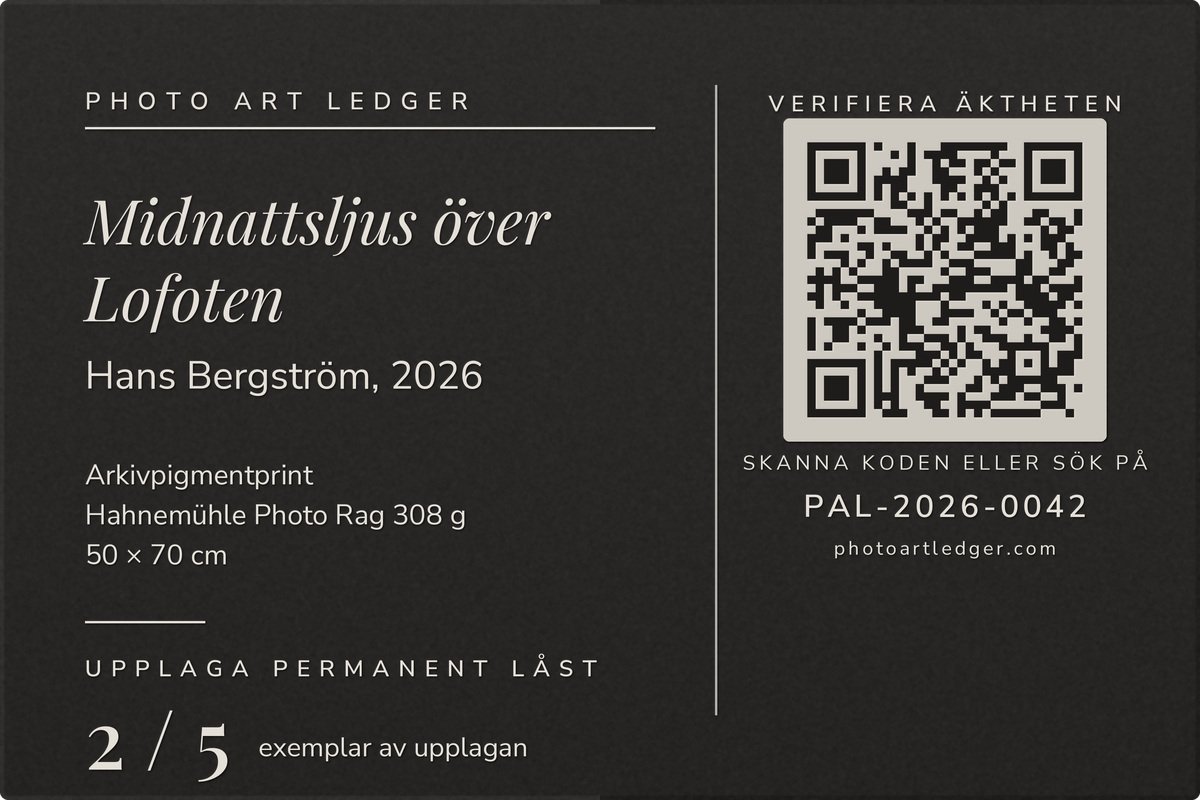
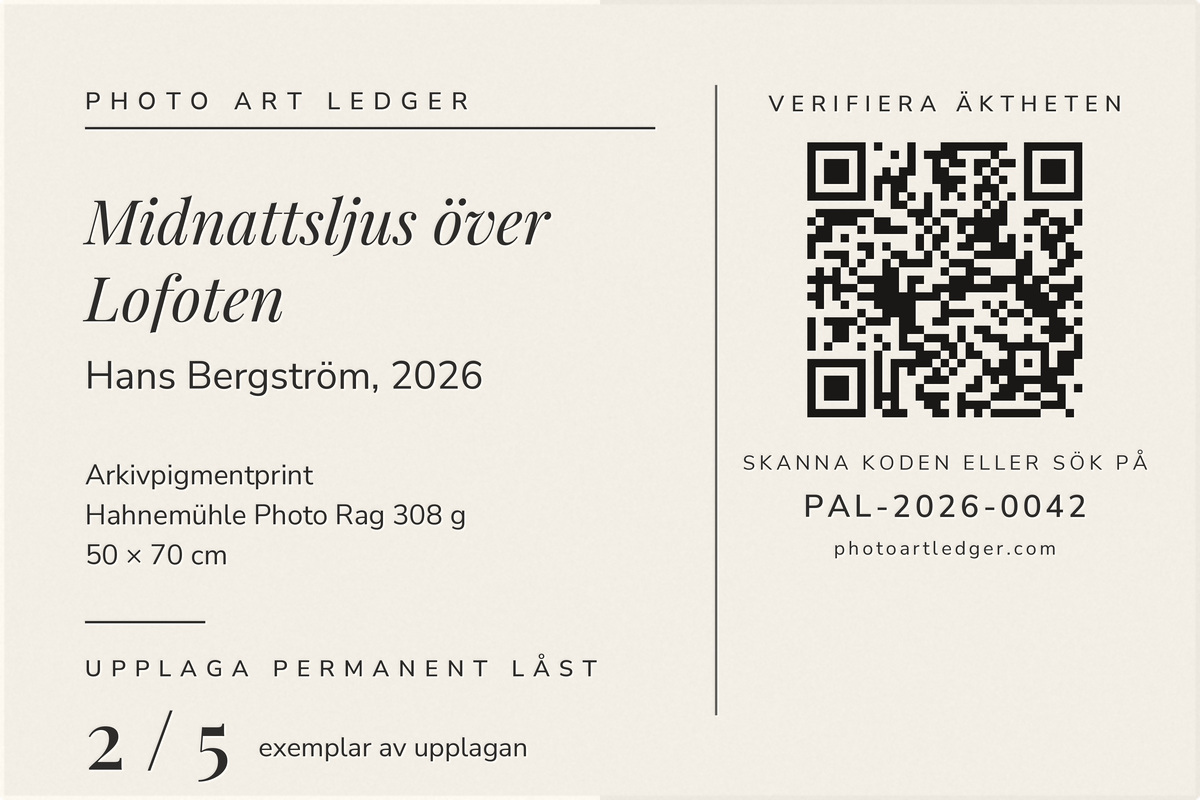
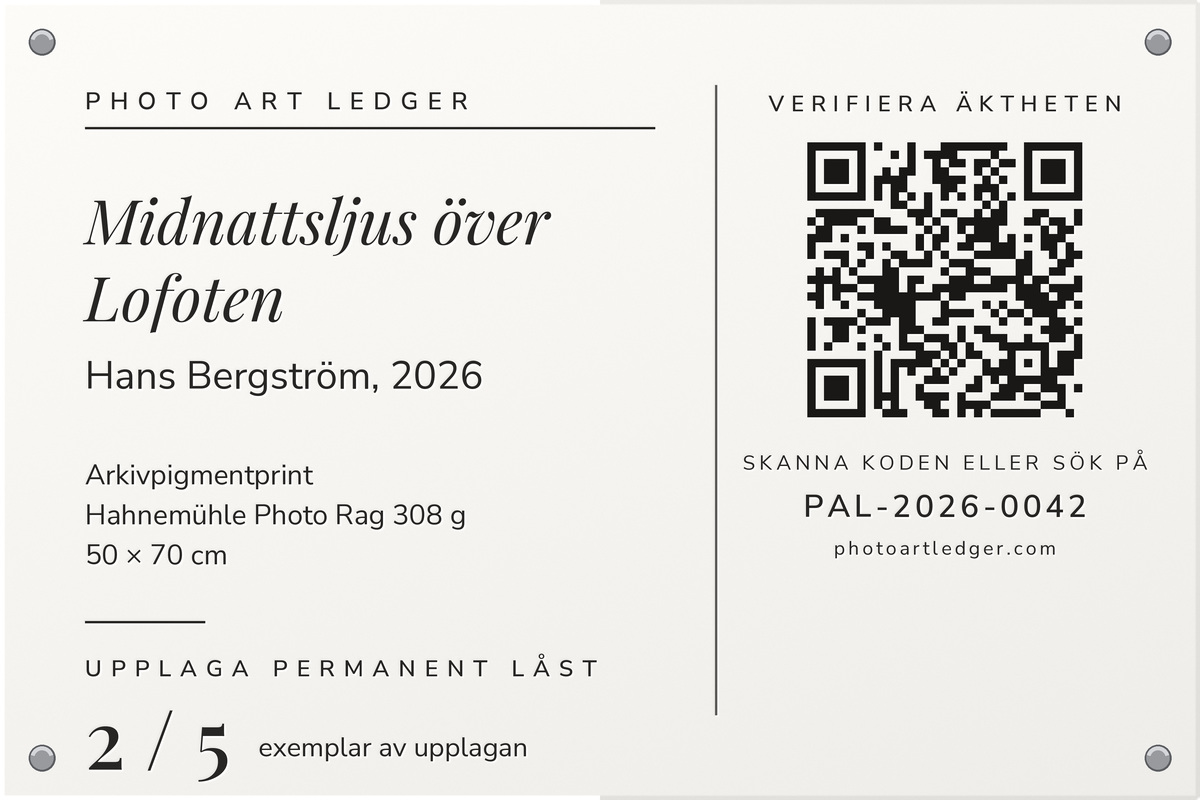
Five materials, same information, same size. Switch material below and the whole page follows.
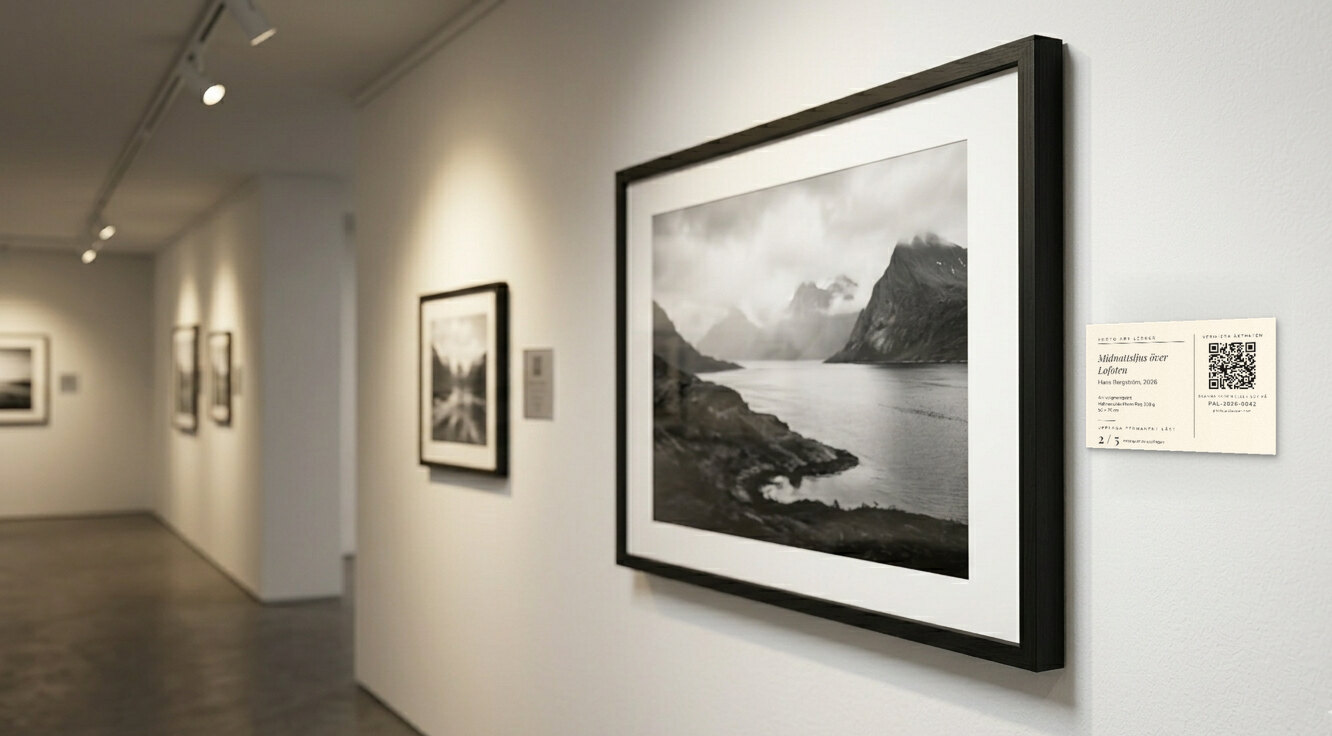
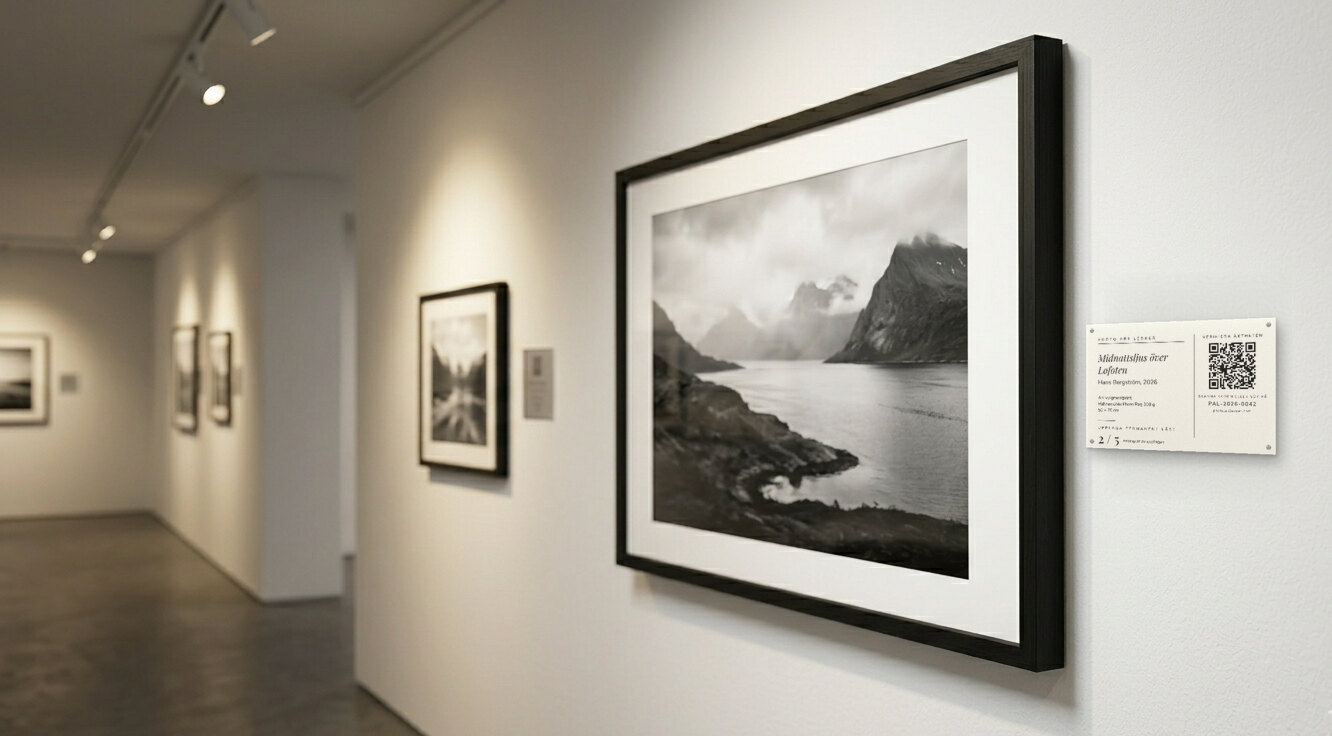
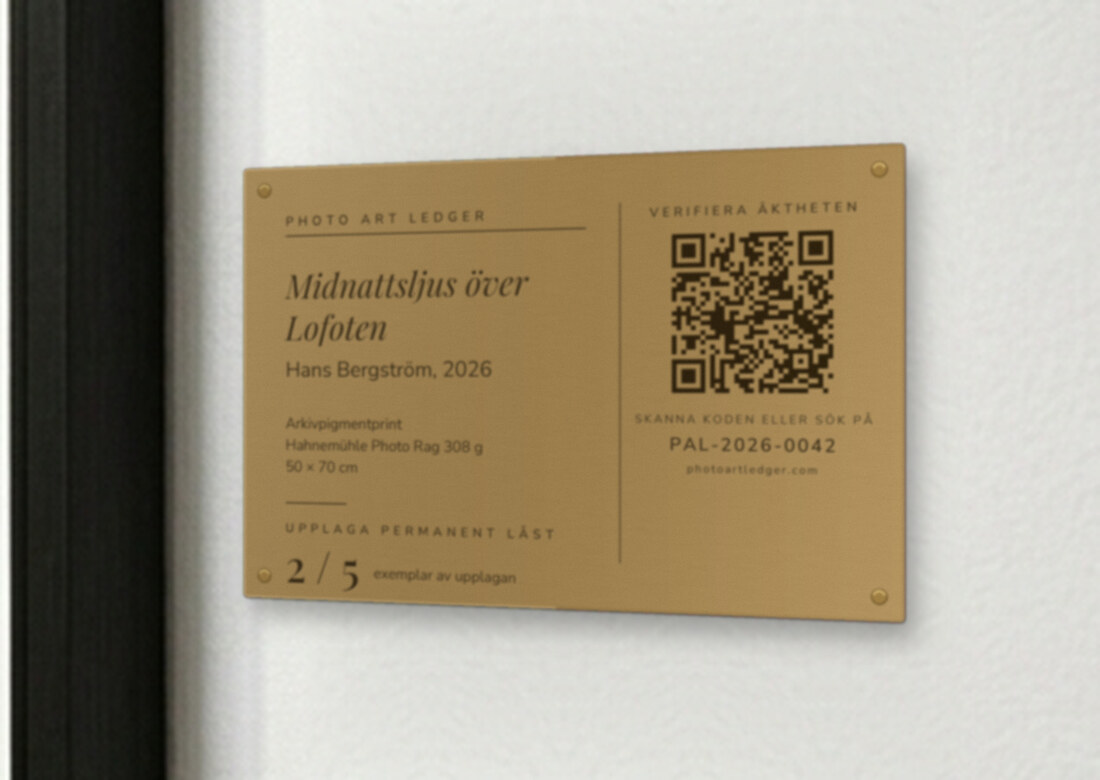
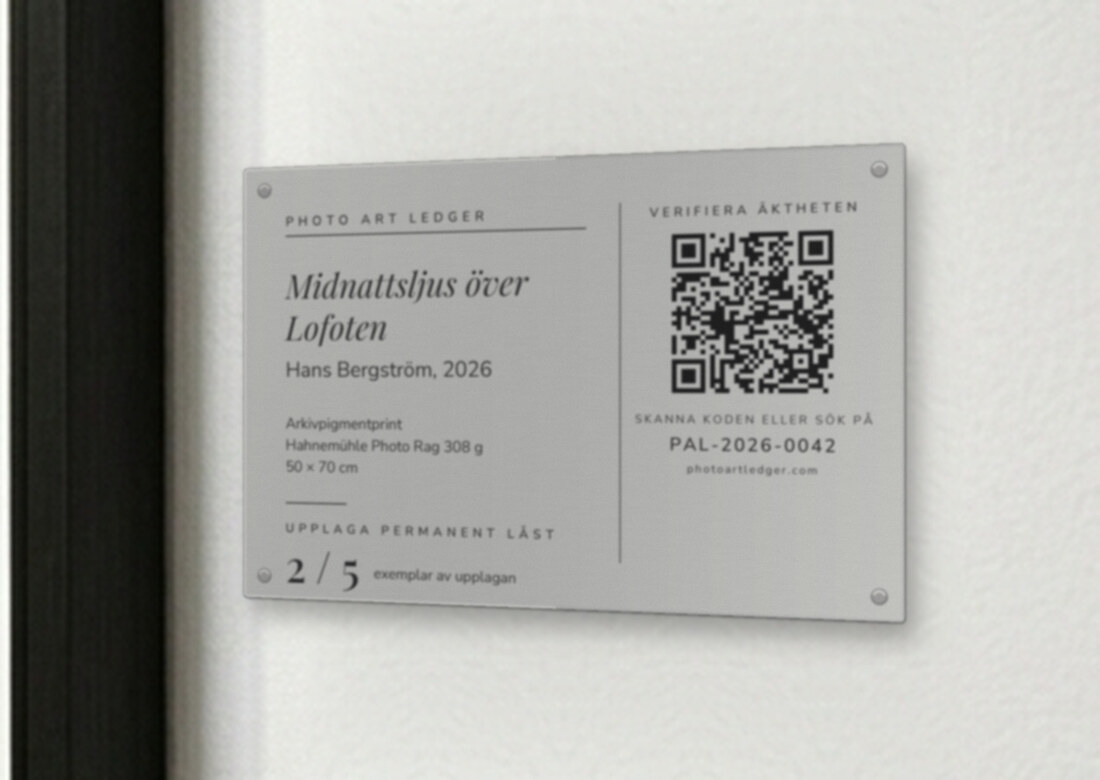
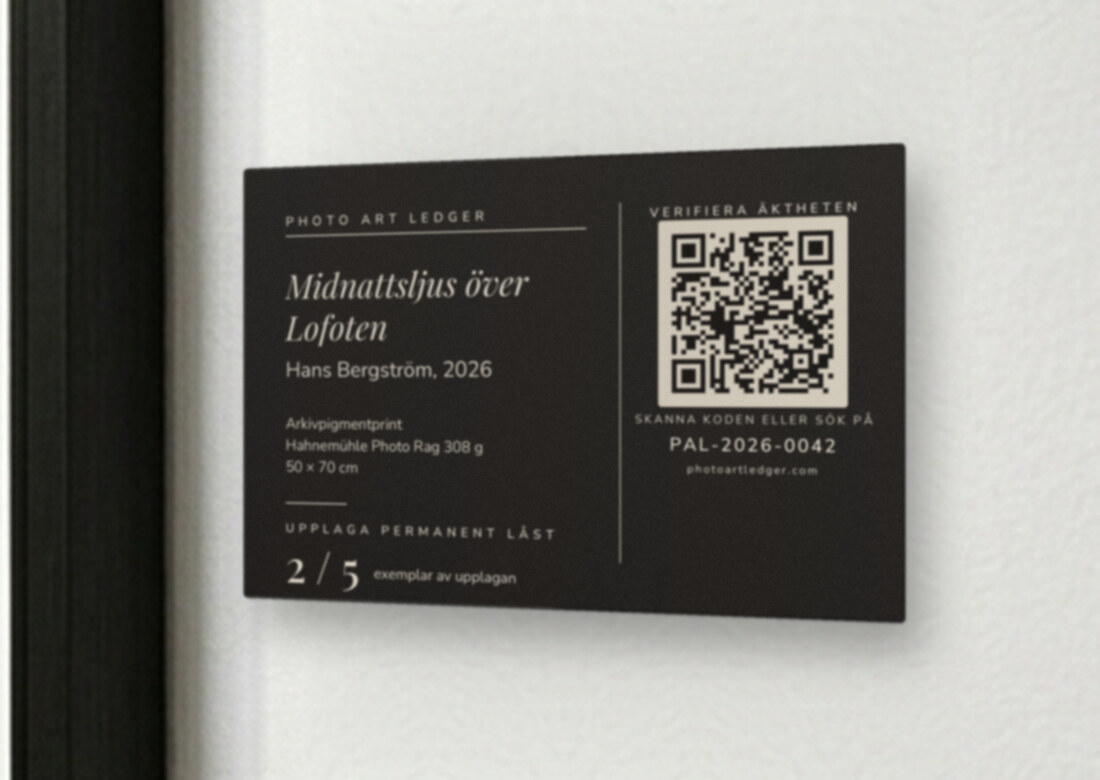
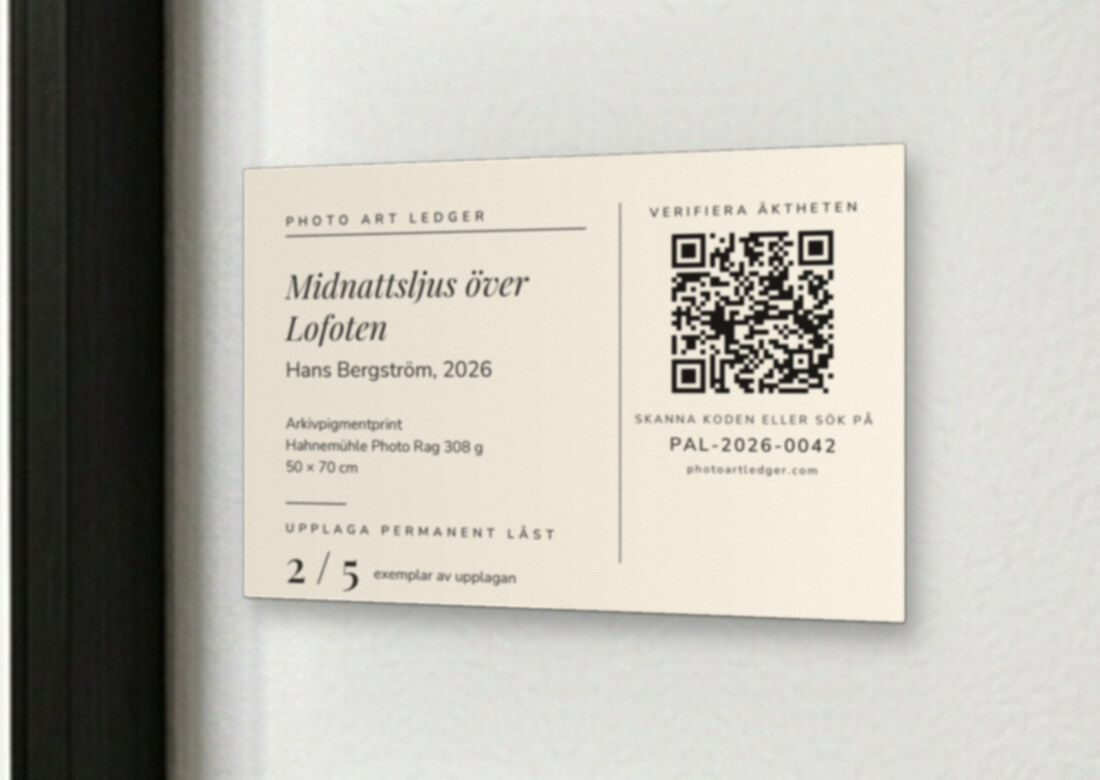
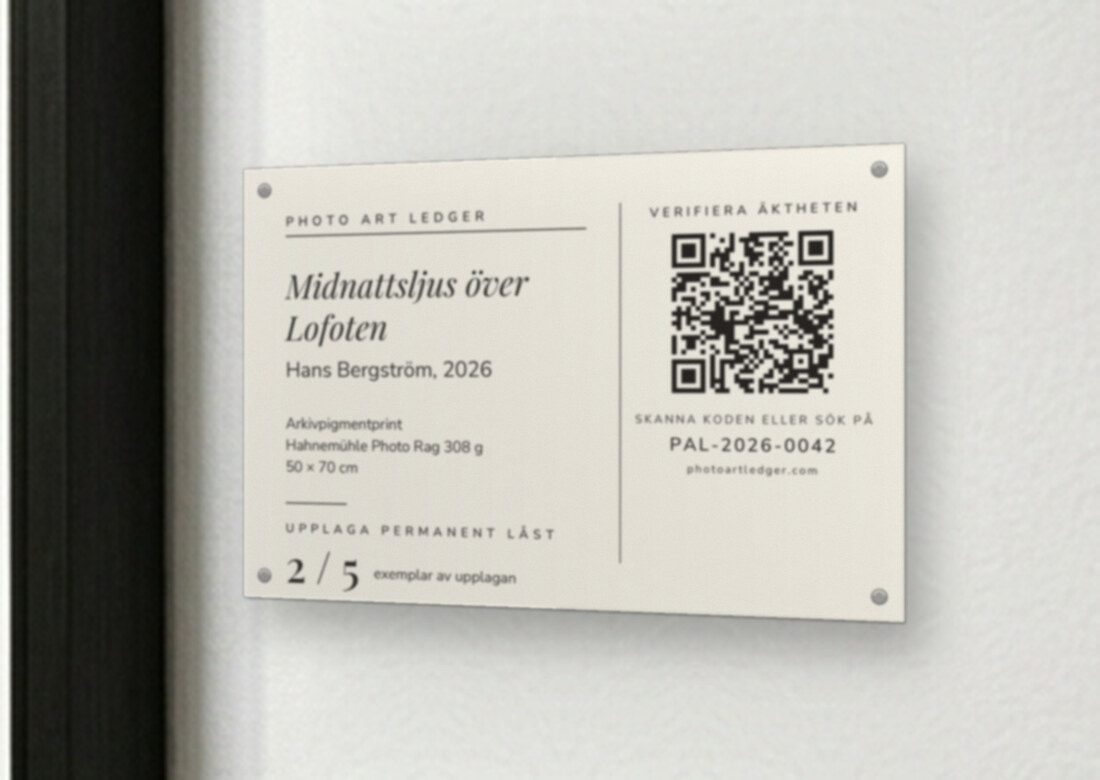 Close-up, same wall
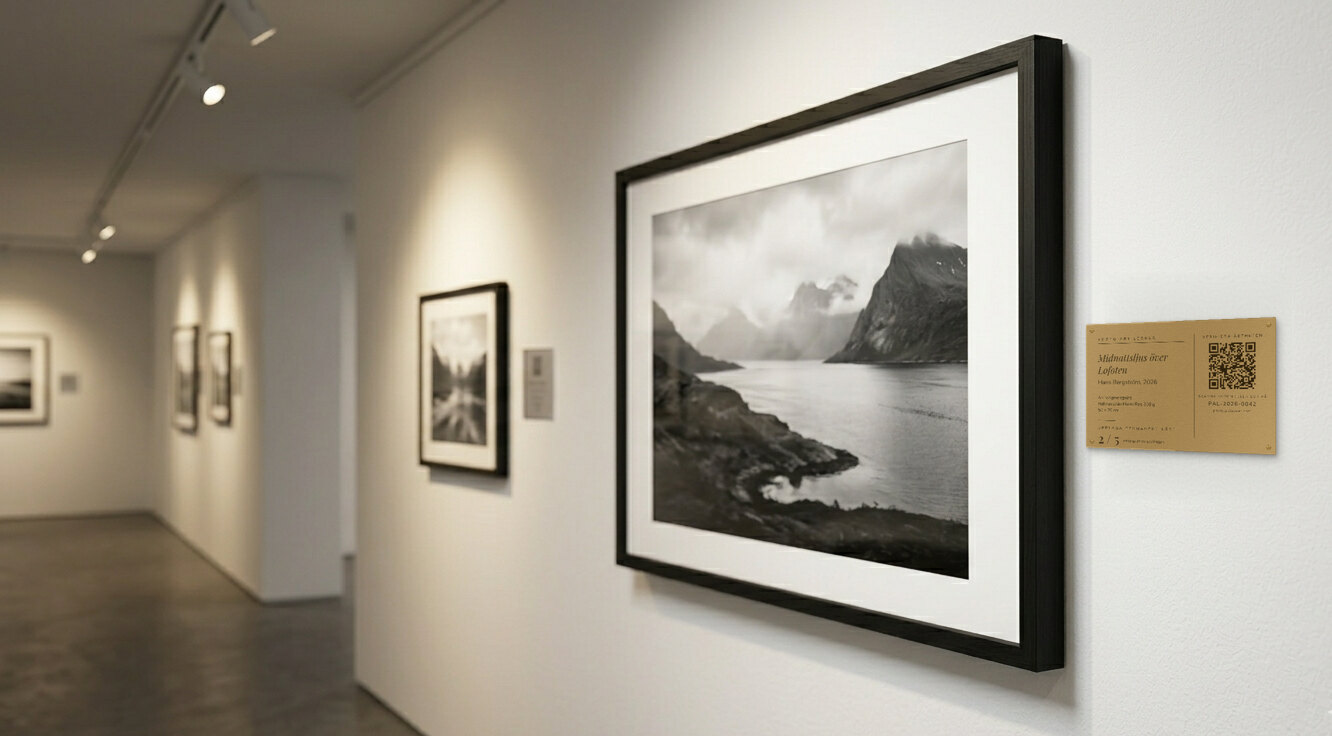
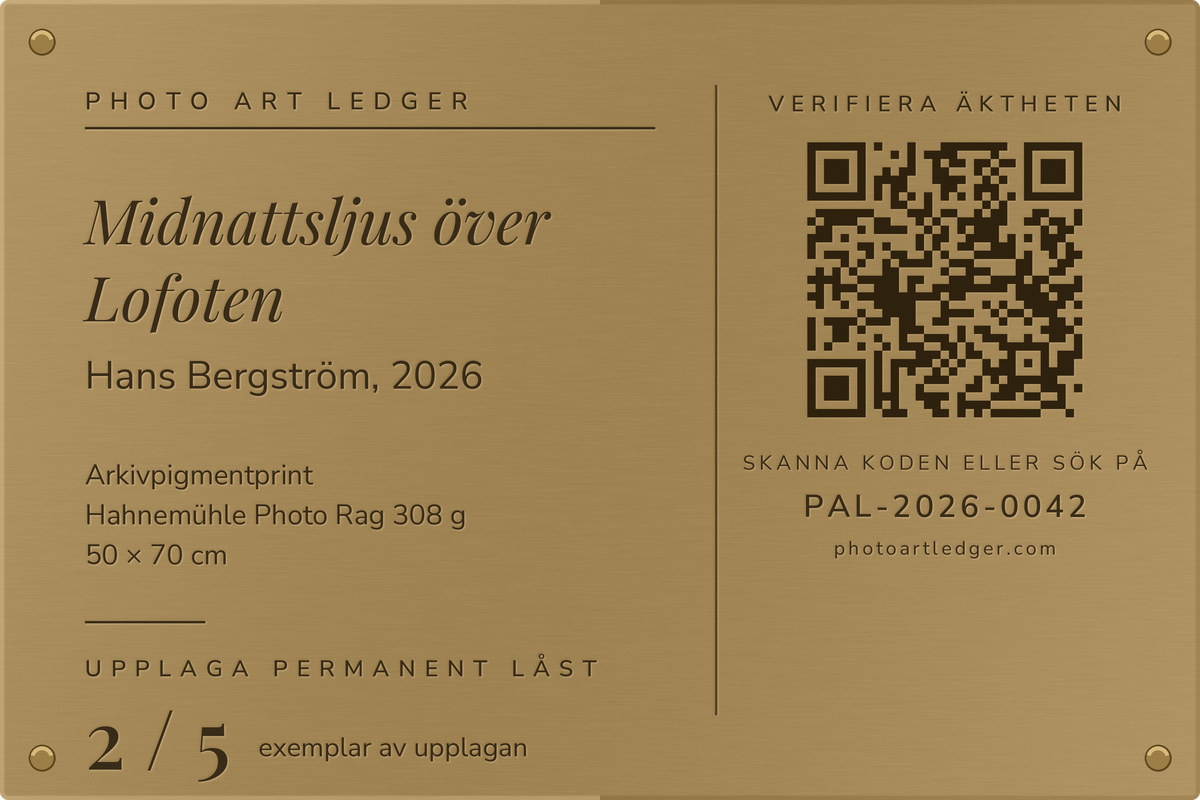
Solid brass with chemically etched lettering. The surface darkens slowly and takes a patina, which suits work meant to hang for a long time.
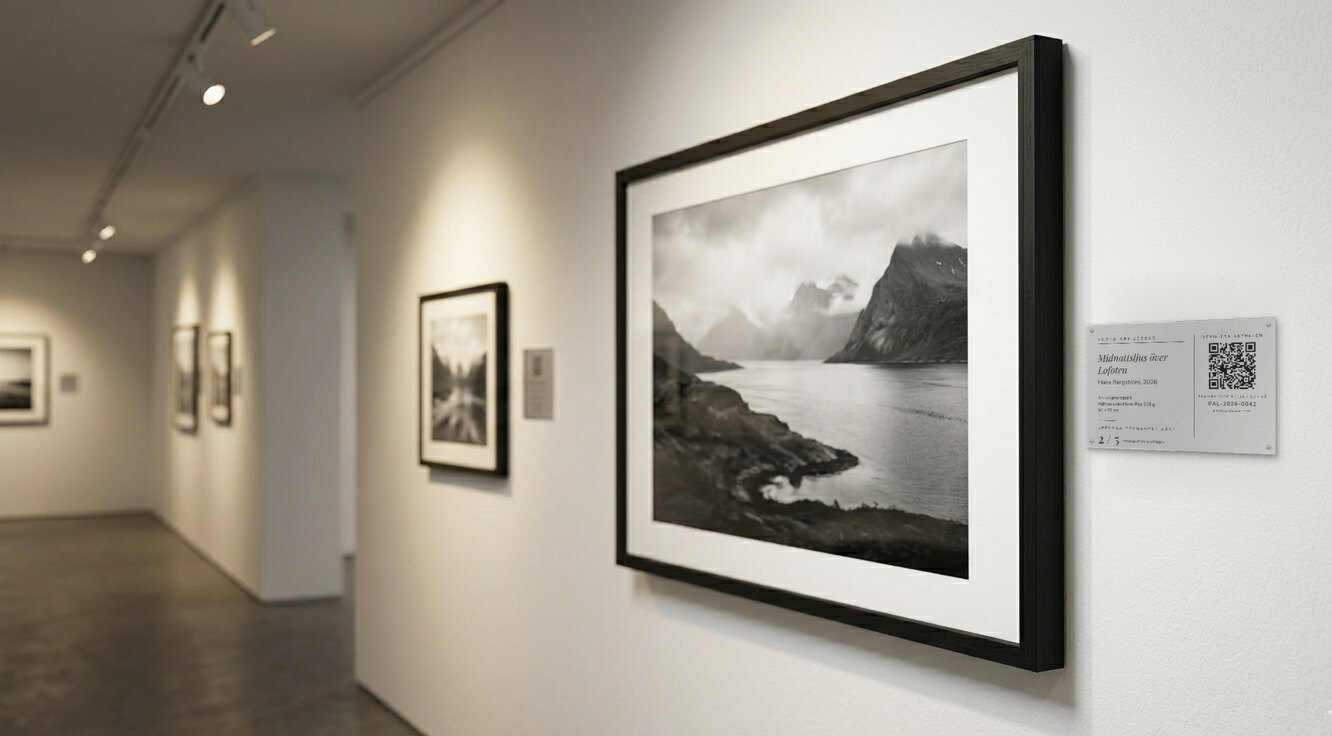
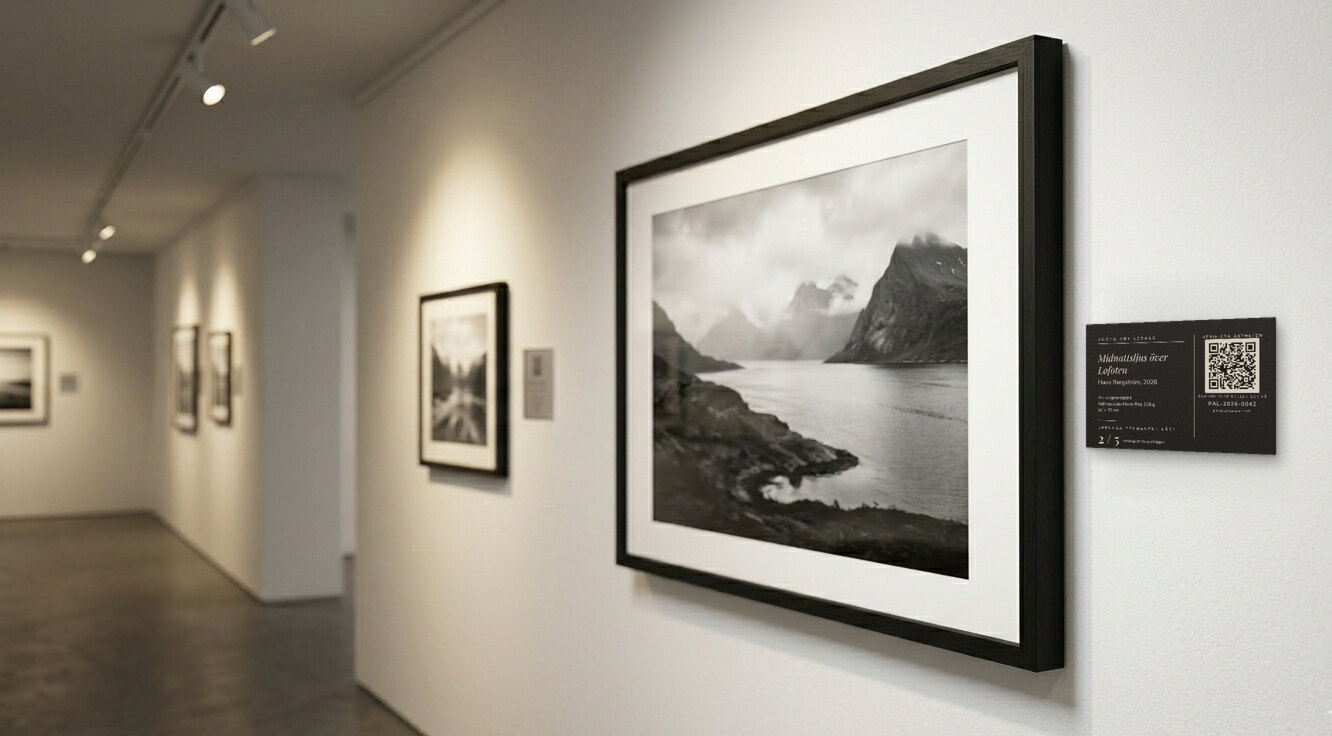
Two columns, divided by a hairline. The left column is what any gallery already puts on a label. The right column is the part only PAL can add.
PAL-2026-0042
The codes in these images are live. Point a phone camera at the plaque beside this text and PAL's verification page opens. Same code, same route a visitor takes in the gallery.
On slate the code sits in a lighter etched field. Light code on dark stone reads slowly on many phones, or not at all, so the field is a technical necessity rather than a design choice.
One format across all five, 120 × 80 mm landscape. Large enough to read from a metre away, small enough not to compete with the work.
| Finish | Thickness | Lettering | Mounting | On change of owner |
|---|---|---|---|---|
| Brass | 3 mm | Chemical etching | 4 standoff screws | New plaque required |
| Brushed stainless | 2 mm | Laser polishing | 4 standoff screws | New plaque required |
| Slate | 8 mm | Laser etching | Concealed, flush to wall | New plaque required |
| Museum board | 1,5 mm | Letterpress | Magnet or pins | Reprinted on site |
| Acrylic | 5 mm | Reverse-side print | 4 polished standoffs | New plaque required |
About the example. The work, the photographer and the certificate code shown are demo data and represent no real edition. The gallery setting is a simulation, made to show proportion and placement.
Photo Art Ledger · photoartledger.com